The hidden meanings behind Victorian rings
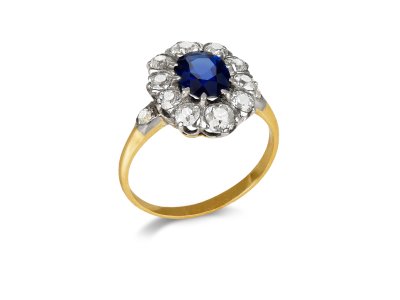
Victorian rings are alive with secrets, symbolism and motifs, reflecting Queen Victoria’s own love for them. Celestial motifs and naturalism were popular due to their connection to romantic symbolism. Additionally, with advancements in gem-setting and metalwork, intricate settings could house a rainbow of gemstones, creating delicate petals, naturalistic leaves, curving stems and detailed serpents. The Victorians favoured deep blue stones in carved half-hoops and clusters, and Victorian sapphire rings remain highly collectable.
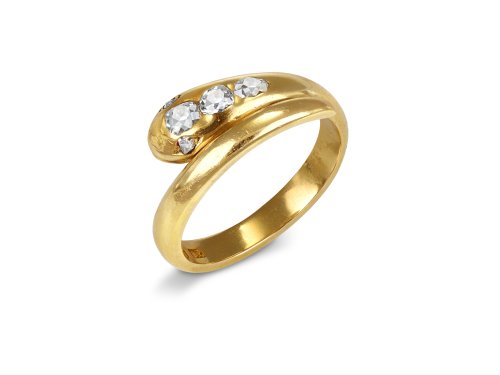
Snakes: Popularised by Queen Victoria’s own engagement ring, snakes were a symbol of eternity, wisdom and rebirth. Snake rings were widely sold as tokens of love and Victorian engagement rings.
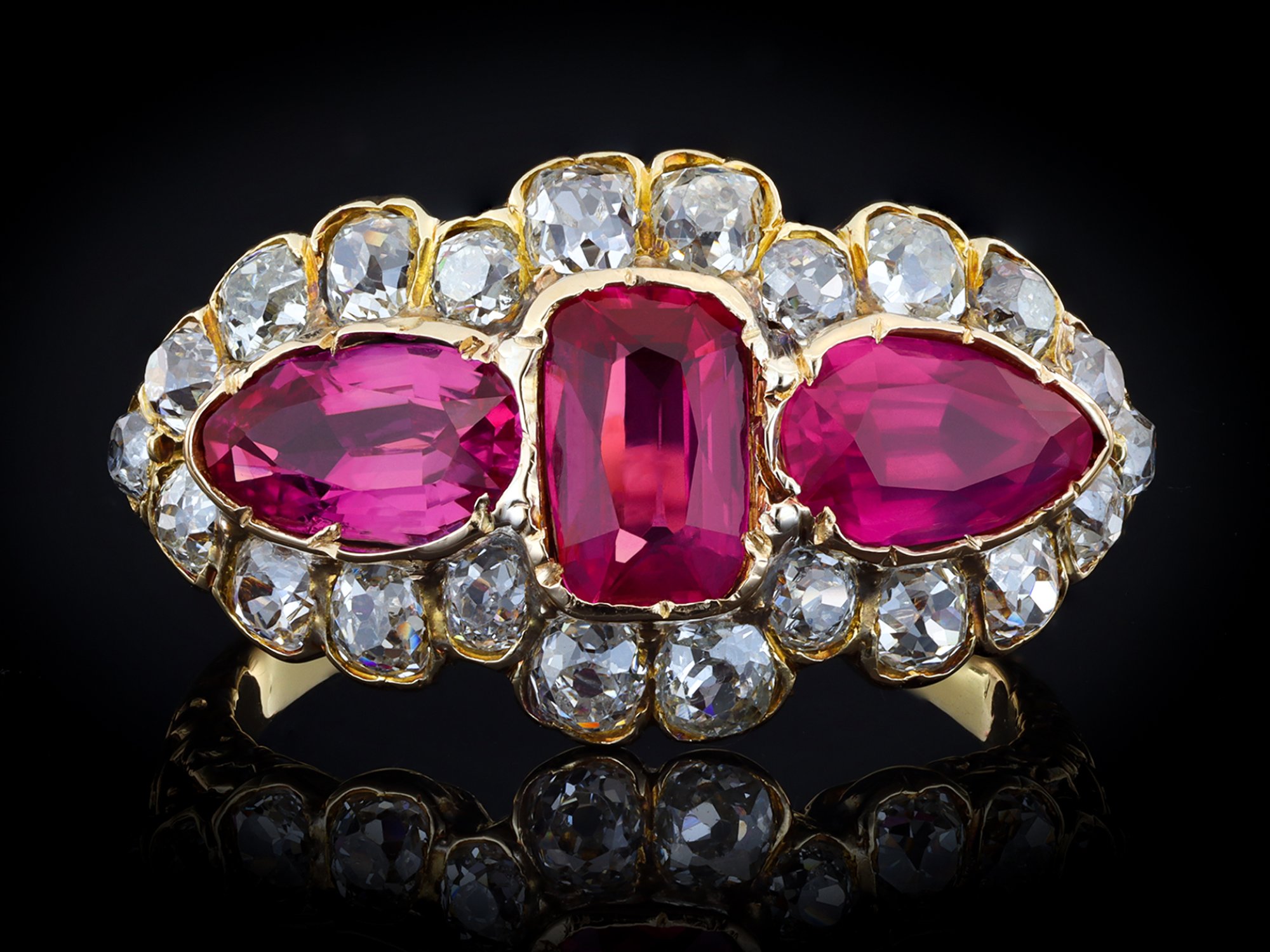
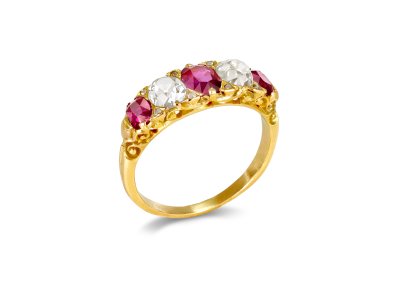
Hearts: Symbolising love and devotion, rings featuring hearts were often exchanged as gifts between spouses or for proposals. The number of hearts carried different meanings, a single heart for love and a double heart for two lives being united. Red stones were a favourite of Victorian jewellers, and carved half-hoop ruby rings are typical of the period.
Flowers: Influenced by the Victorian language of flowers, floral design became deeply symbolic and conveyed messages of love, devotion, fidelity and remembrance. Each flower conveyed its own meaning: roses for love and passion, forget-me-nots for remembrance, lilies for purity and innocence, ivy for fidelity, daisies for loyalty and pansies for thoughtfulness.
Stars: Stars symbolised hope, light and guidance, reflecting the advancements in astronomy at the time; they became especially popular after Albert's death and are frequently seen in mourning rings. These worked particularly well in Victorian jewellery as they could be set with old cut or rose cut diamonds to create constellations almost like the night sky.
Knots: The lovers knot is something that predates the Victorian era; however, it became popular once again for its enduring symbolism of eternal love and union. Victorian rings also feature bow knots that could quietly symbolise two people connected.
Gemstone symbolism in Antique Victorian Rings
In the Victorian period, gemstones were rarely chosen for colour alone; each carried significance and, to nineteenth-century wearers, transformed Victorian rings into a symbol of love, remembrance, loyalty or hope. These gemstones travelled to Victorian England along trade routes from historic mines such as Ceylon, Burma and Colombia.
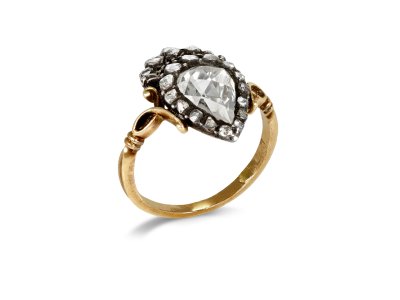
Diamond: Diamonds' durability made them the perfect symbol of enduring love and consistency; this naturally made them popular for engagement rings and sentimental jewellery. Old mine and rose cut stones in gold collets are typical of Victorian diamond rings. Popular diamond cuts at the time were the old mine cut, old European cut and rose cut.
Sapphire: Associated with loyalty and sincerity, sapphire symbolised wisdom and faithfulness.
Rubies: Representing passion and affection, the ruby's colour made it a perfect symbol of romantic love.
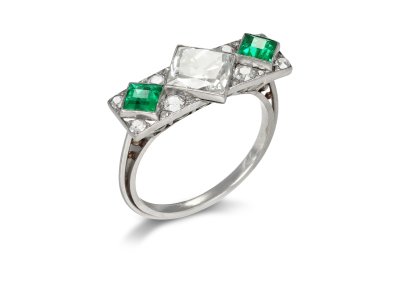
Emerald: Queen Victoria's own choice, emeralds represented happiness, renewal and optimism, the promise of an enduring relationship. The Victorians often set green stones in carved half-hoops and serpent designs, and Victorian emerald rings remain highly collectable.
Pearl: Favoured in Victorian bridal and sentimental jewellery, pearls represented innocence and purity.
Popular styles for Victorian engagement rings
Victorian engagement rings span a variety of distinctive styles, from decorative gemstone clusters to intricate carved settings and understated bands. Here are some of the era’s most popular designs.
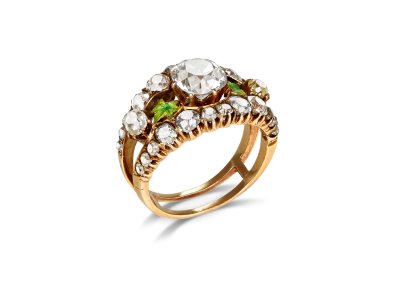
Cluster Rings: Perhaps the quintessential style of the Victorian era, cluster rings featured many different types of gemstones juxtaposed against diamonds, often in a floral cluster or coronet cluster design, reflecting the Victorians' obsession with naturalistic designs.
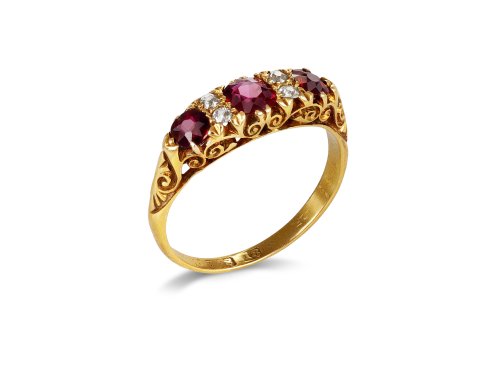
Carved Rings: One of the most distinctive Victorian styles, carved rings feature intricate carved galleries of scrollwork and foliage, with a row of gemstones across the top often in three or five-stone designs, occasionally with alternating accent gems. These were often given as engagement rings during the period.
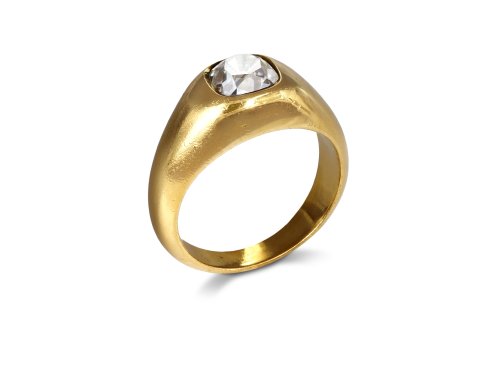
Gypsy Rings: Popularised in the mid to late Victorian period, gypsy rings featured diamonds and gemstones set flush to the band; heavier in construction, they reflect natural organic forms. Worn as one of the earliest gender neutral styles, they were favoured for their simplicity and practicality, great for everyday wear. They often featured stars engraved into the settings.
Choosing a Victorian engagement ring
Antique Victorian rings are embedded with meaning, from their delicate gold and silver construction to the gemstones they're set with. Each piece is a window into this eccentric period of jewellery design where symbolism and sentiment were paramount. For this reason, Victorian rings make the perfect engagement ring whether you're looking for a delicate solitaire or an ornate cluster; our curated collection features only the finest original examples.